
Brioso Living
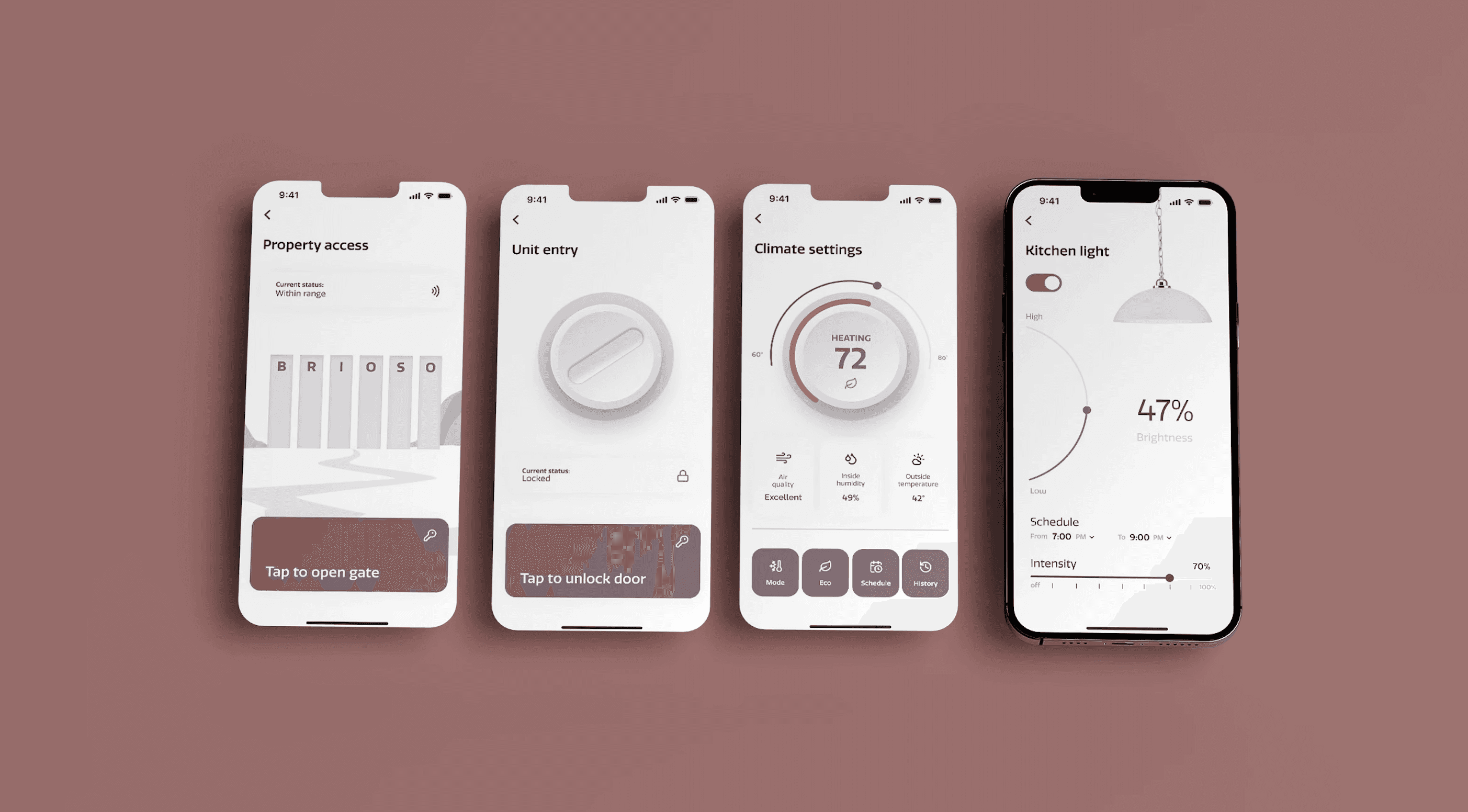
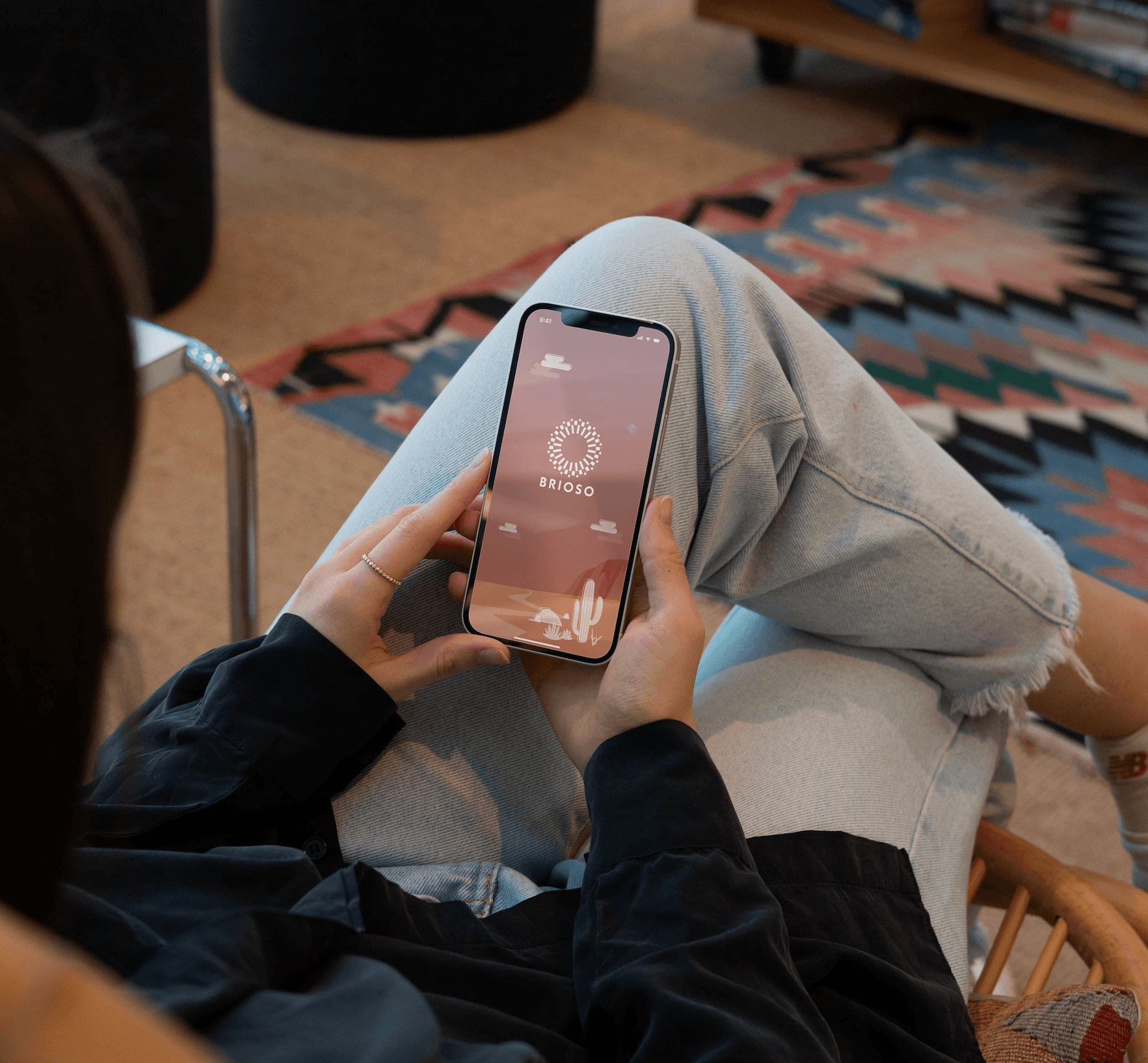
Designed a luxury residential iOS platform that transforms property management from utility into a service-driven, concierge-level experience.
Client:
Bourn Companies
Category:
Product Design, UX Strategy, Mobile Systems
My Role:
Lead Product Designer
Collaborators:
Marketing Director: Dillon Walker
Creative Production: Sneaky Owl, SWOON Media, Fuel Creative
The Problem
Most residential apps solve tasks. They don't create experiences.
Property management platforms focus on rent payments, maintenance requests, and basic utilities. Functional, but disconnected from how people actually live. For Brioso — a luxury residential brand — this meant the physical environment was elevated and the digital product was transactional.
The app needed to match the brand. Not just visually, but in how it supports daily life.
Research → Insight
This wasn't a feature problem. It was a positioning problem.
Residents don't think in terms of property management systems. They think about what they need right now, what's happening around them, and how their home fits their life.
Luxury isn't more features. It's less friction.
The product needed to behave less like software and more like a concierge.
Structure
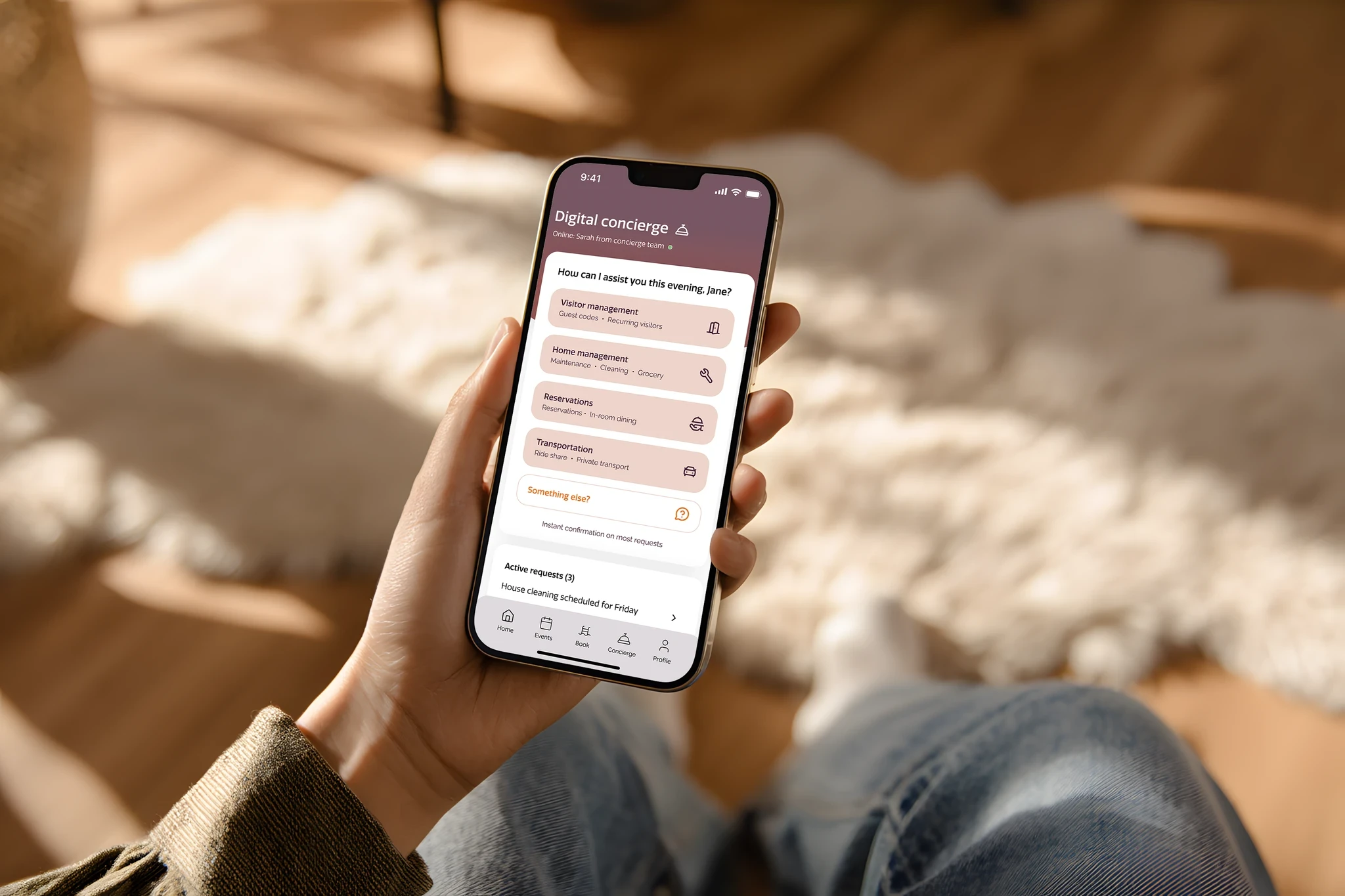
I reframed the app as a service layer for daily living, built around three integrated pillars: essentials, experiences, and connection.
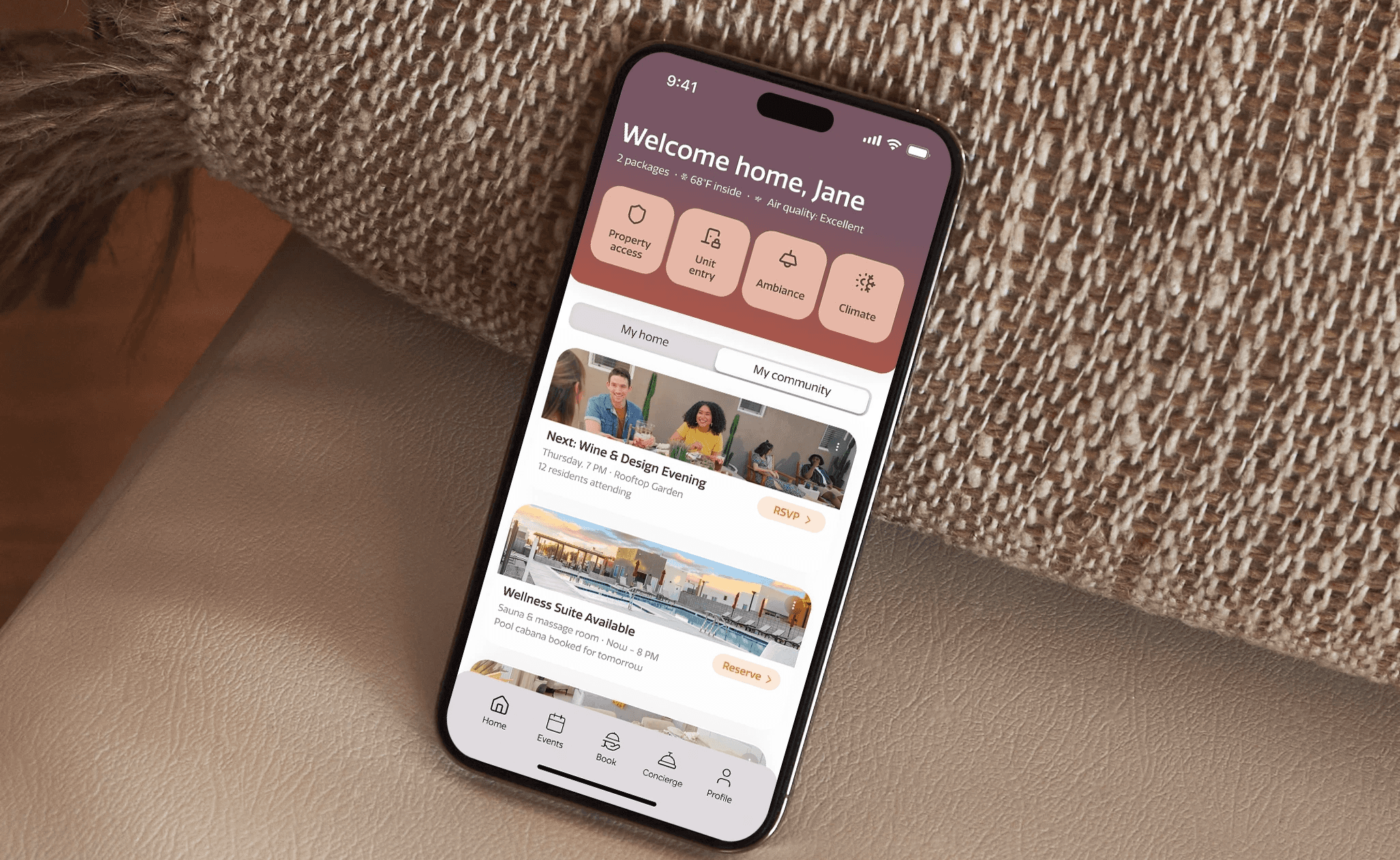
Essentials covers access, payments, and climate. Experiences introduces events and curated local recommendations. Connection enables a resident network that feels intentional rather than performative.
Not separate features — a unified system where utility and lifestyle coexist.
Information Architecture
Navigation was the defining UX decision.
I designed a five-tab structure modeled after a concierge desk — everything visible, predictable, immediately actionable. Each section reflects a user intention rather than a backend system.
This reduces cognitive load, shortens time to action, and lets users move through the product without needing to learn it.
Experience Design
The interaction model prioritizes speed, clarity, and responsiveness. Adjusting climate or submitting a request feels immediate. Discovery of events and experiences is passive — surfaced, not searched for.
The tone shifts from transactional to service-oriented. The app supports the resident rather than manages them. Community features are intentionally low-pressure — designed around trust and comfort, not engagement loops.
The result is calm, intuitive, and aligned with what luxury actually means in a digital context.
Design System
Mobile-first, built for clarity and consistency. Minimal visual language, high legibility, subtle motion for hierarchy and feedback. Components scale across features without introducing noise.
Luxury expressed through restraint, not decoration.
AI in This Project
This was a resource-constrained project with high production expectations. I used AI to iterate on interaction patterns, refine microcopy, and prototype flows closer to real product behavior than static mockups could achieve.
The difference here was stakeholder alignment — AI-assisted prototypes let me present work that felt tangible to non-design stakeholders earlier in the process, which shortened feedback cycles and reduced misalignment.
Impact
Shifted perception from utility app to lifestyle experience. Digital product aligned with physical brand. Supports everyday tasks and elevated living within the same system. Scalable foundation for future features.
What I'd Do Differently
I'd introduce behavioral analytics earlier. The product was grounded in strong user mental models, but earlier visibility into usage patterns and drop-off points would allow for faster iteration and deeper engagement optimization over time.
“Brioso feels elevated in every detail. The app finally matches the experience of the community.”

Dillon Walker
Bourn Companies, Marketing Director