
hair rules
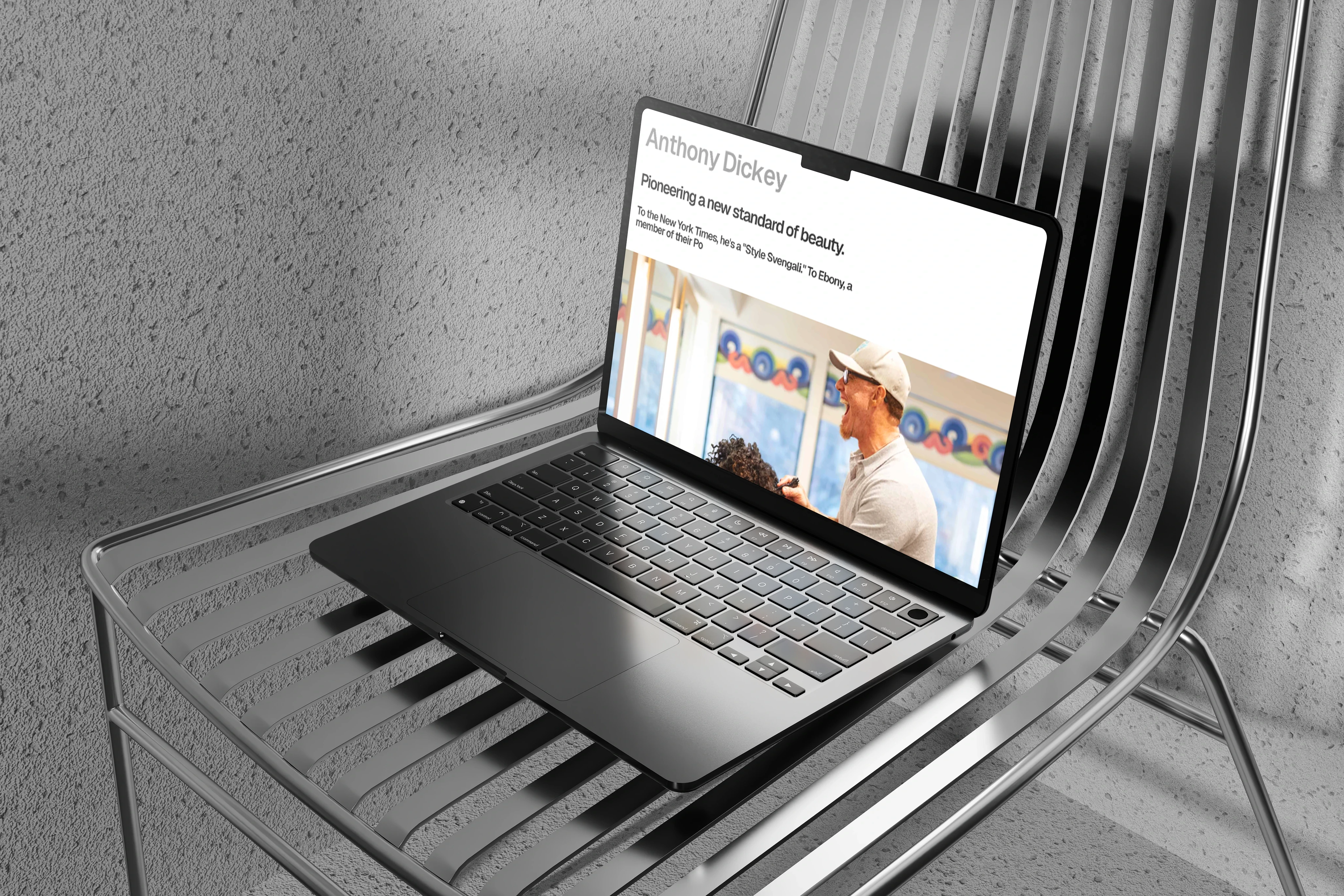
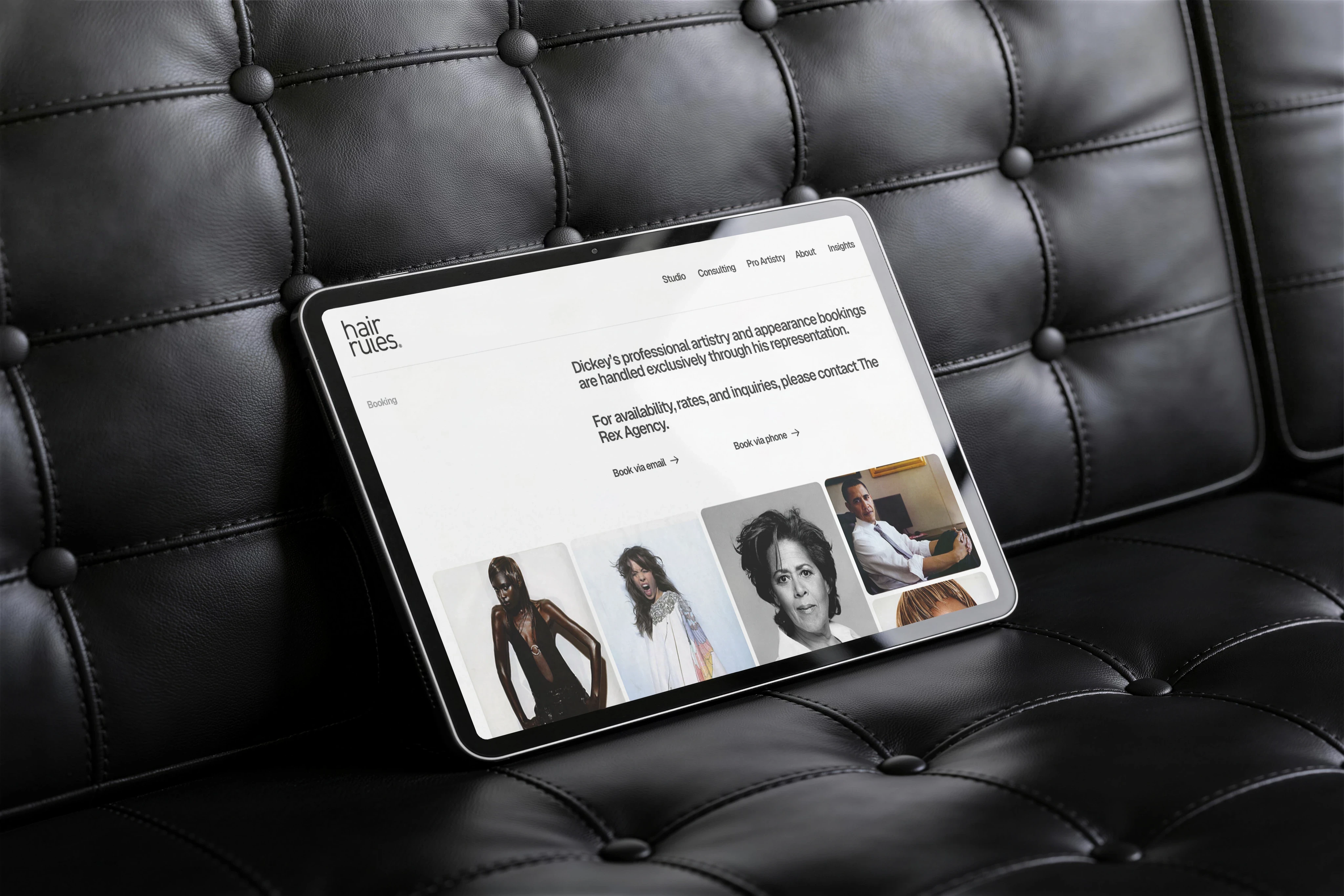
Redesigned a multi-audience brand platform for a category-defining hair authority — unifying client services, consulting, and media into a clear, conversion-driven system.
Client:
Hair Rules / Anthony Dickey
Category:
Product Design, UX Strategy
My Role:
Lead Product Designer
The Problem
Hair Rules had authority. The site didn't reflect it.
Anthony Dickey is a category pioneer — 30+ years across all hair textures, a nationally recognized product line, a foundational book used in cosmetology programs. But the digital experience fragmented that expertise. Studio clients, brands, and media audiences were mixed together. Navigation blurred high-value services like consulting versus appointments. The site explained what existed rather than why it mattered.
High credibility, low clarity. Traffic coming in, little conversion coming out.
Research → Insight
This wasn't a salon problem. It was a multi-sided platform problem.
Clients were looking for trust and transformation. Brands were looking for strategic expertise. Media and industry audiences were looking for thought leadership. Across all three, one insight held: people weren't shopping for services. They were looking for certainty.
Dickey's real product isn't hair. It's understanding texture when no one else does.
Structure
I reframed the site as a two-path system built around how users see themselves.
"For Your Hair" speaks to clients with an emotional, service-driven lens. "For Your Brand" positions Dickey as a strategic partner. This reduced cognitive load immediately and gave users a clear sense of direction from the first interaction.
Everything else became supporting infrastructure — Studio for in-person and virtual clients, Consulting and Pro Artistry for brands and creative work, About and Media for credibility and narrative depth.
Information Architecture
The core challenge was separating offerings that sounded similar but served different audiences.
Consultations for clients and consulting for brands needed clear distinction. Studio needed to feel different from strategic-level engagement. Media needed to function as authority, not just content.
I designed a navigation system that prioritizes audience before service, nests complexity under clear intent, and uses language that reflects how users think — not how the business is organized internally. Simple at the surface, depth underneath.
Experience Design
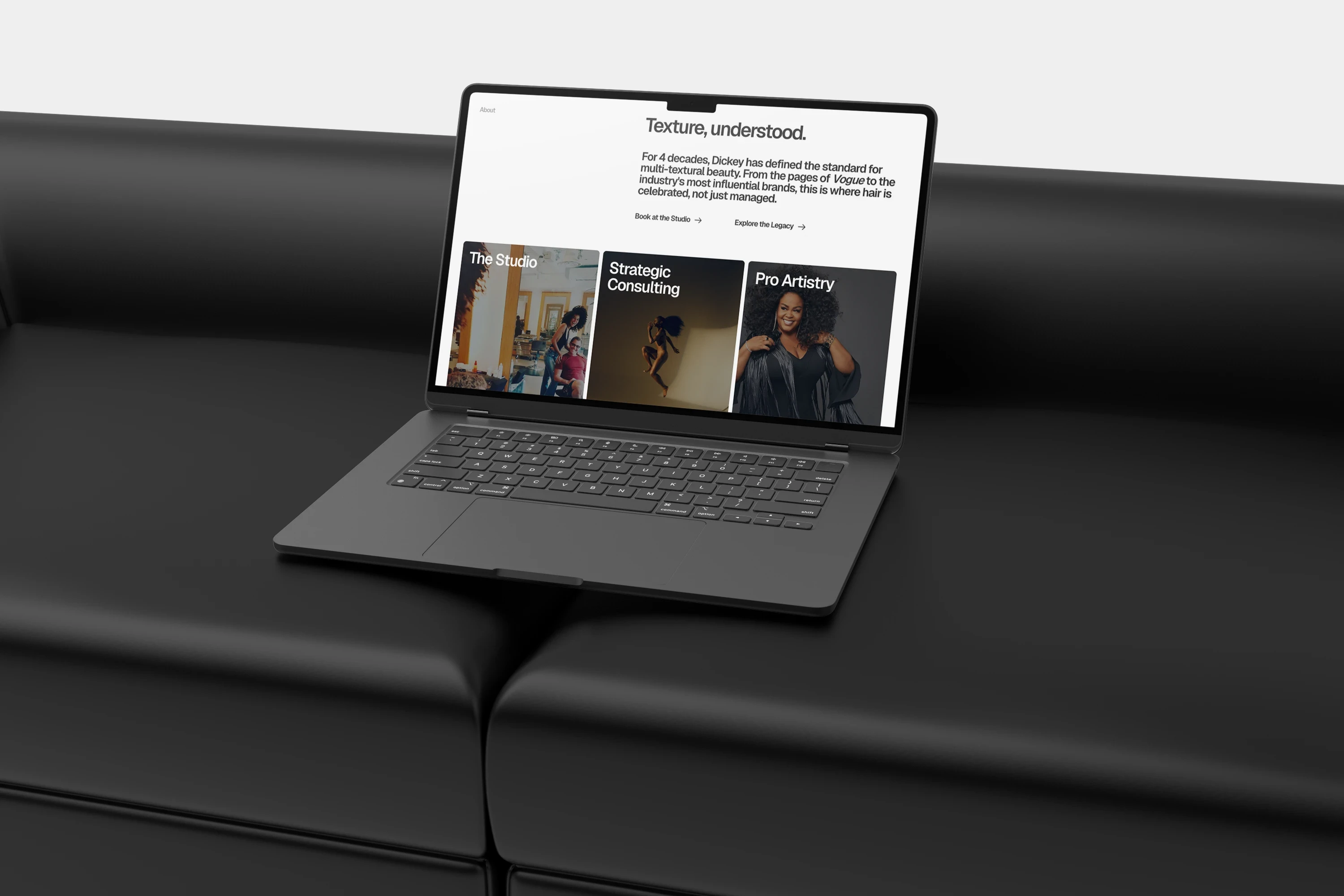
The homepage functions as a funnel. It establishes authority immediately, presents the audience split within seconds, and uses minimal copy to move users forward.
The studio experience focuses on trust and transformation — clear location context across New York, LA, and Atlanta, reduced booking friction, confidence reinforced through visual and emotional cues.
The brand experience shifts tone toward credibility and strategic value — Dickey positioned as an advisor, his breadth across product, education, and culture made legible, everything aligned with how brands evaluate expertise.
Design System
Lightweight and scalable. Typography and spacing optimized for an editorial, authoritative feel. Modular sections for flexible storytelling across audiences. Reusable components for consistency without slowing down a lean team.
The system needed to feel premium and culturally grounded while staying simple enough to maintain.
AI in This Project
AI was the production layer. I used it across UX copy iteration, tone refinement, component logic, responsive behavior, and the front-end build in Framer. I tested layout variations and refined decisions in real time without a separate engineering cycle.
No dedicated front-end engineer on this project. AI let me translate design directly into production and build complex responsive systems at speed without losing precision.
Impact
Clear separation between client and brand journeys. Reduced confusion across services and navigation. Elevated Dickey's positioning as both stylist and strategist. Established a system that scales as the business evolves.
What I'd Do Differently
I'd validate navigation clarity earlier with live users. The architecture is strong, but testing with first-time visitors and brand-side stakeholders would have surfaced edge-case confusion sooner — particularly around service naming and how users interpret different pathways.
"Shawnee turned my work into a clear, cohesive user experience. She understood the message quickly and made the process collaborative and much easier than I expected."

Anthony Dickey
Founder, Hair Rules